By Alam Zeb Safi
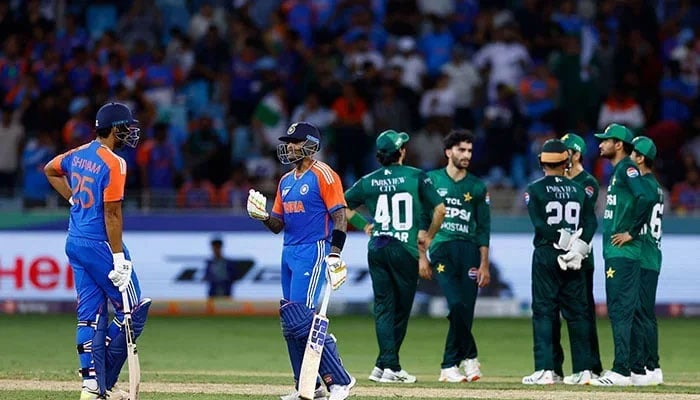
LAHORE: Former Pakistan Test opener Sadiq Mohammad has strongly supported the Pakistan Cricket Board’s decision to boycott match against India, warning the International Cricket Council (ICC) that any move to bar Pakistan from the World Cup could lead to serious legal consequences.
Sadiq cautioned that the ICC should not take PCB Chairman Mohsin Naqvi lightly, stressing that Pakistan has not withdrawn from the World Cup but has only opted out of playing against India. According to him if Pakistan is excluded entirely the ICC could find itself facing legal action in UK or European courts. He added that Mohsin Naqvi will certainly consult his legal team and management before any final step and the ICC itself would be forced to seek legal advice before acting.
He pointed out that Pakistan’s decision would only result in monetary loss for the ICC, nothing more, since Pakistan would continue to play against all other participating nations. Sadiq recalled that in a previous World Cup when a team believed to be the West Indies refused to play a match, no harsh action was taken, questioning why Pakistan is repeatedly placed on the receiving end.
Sadiq Mohammad described PCB’s move as a brave and principled stand, praising Mohsin Naqvi for showing the kind of leadership Pakistan cricket has long needed.
“Only a brave chairman like Mohsin Naqvi can take a stand of this kind,” he told thecricketplus.com. “Money is not everything and this message has now gone out to all cricketing boards and the ICC.”
He criticized the ICC for what he termed biased decision-making, claiming the body is dominated by individuals of Indian origin and accusing it of acting under undue influence despite being an independent organization. He emphasized that the BCCI cannot dictate terms to other countries, particularly on legitimate security concerns.
Sadiq also questioned the ICC’s earlier decision to replace Bangladesh with Scotland, calling it illogical and unfair. He urged all cricket boards especially those of European origin to unite and remind the ICC of its responsibility to remain neutral and independent. In his view, Bangladesh should be reinstated, noting that the Bangladesh Cricket Board never refused to participate and had only requested a venue adjustment.
Calling for collective resistance, Sadiq said it was time for cricket boards to stand together and make it clear that participation cannot be dictated through pressure or financial power.
“This is the strongest chairman Pakistan has had,” he said. “Why is Pakistan always expected to accept this nonsense?”
Sadiq said that from a legal standpoint, the situation is far more complicated. In previous World Cups notably in 1996 and 2003 teams such as West Indies, Australia, England and New Zealand refused to play certain matches without facing severe consequences. However, what remains unclear is how ICC participation agreements and contractual obligations have evolved since then. The critical question now is how the ICC would respond if Pakistan were to face India in a knockout match such as a semi-final or final where a walkover would directly impact the tournament’s outcome.
He concluded by expressing confidence that the ICC would think twice before taking extreme action, warning that excluding Pakistan entirely would place the governing body in “grave trouble,” both legally and morally.