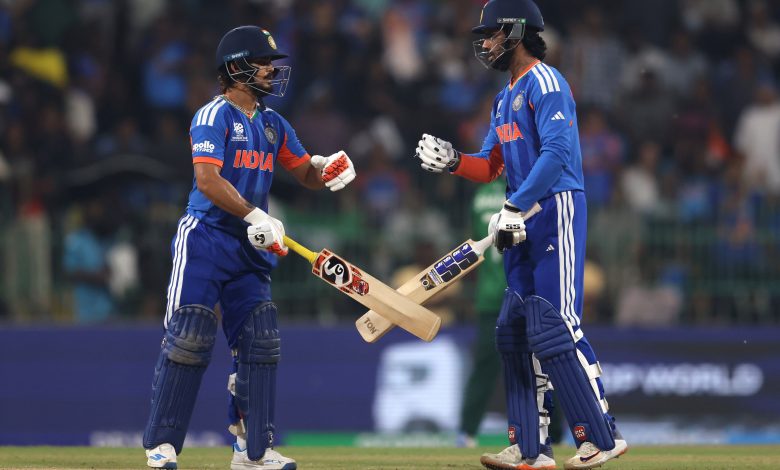
By Rakesh Pandey
India’s 76-run loss to South Africa in their first Super 8 match exposed its weaknesses in batting stability, middle-over bowling control, and tactical decision-making.
Coming into this tournament, India’s batters were at their demolishing peak. In the 4-1 win over New Zealand India scored at above 12 an over across that series. But the same batters somehow lost their momentum coming into this World Cup. The defending champions never looked like a perfect batting unit for this world cup.
India began their World Cup campaign against USA at Mumbai, and after a shaky start, they were 77/6 at one stage, however, skipper Suryakumar Yadav’s heroic 84* lifted the team to a defendable total of 161.
In their second encounter against Namibia at Delhi, it was mainly due to brilliant fifties from Ishan Kishan (61) and Hardik Pandya (52) that took the team to victory.
In the much awaited match against main rivals Pakistan at Colombo, once again it was Kishan who inspired the team with a smashing 77 that paved way for a convincing win.
And in their last group stage match against Netherlands, Shivam Dube (66) changed the game with his powerful hitting which proved enough for Netherland.
But looking back into all four group stage matches, the team lacked collective batting unit. In all these matches it was just one batter who stood against the odds and guided the team past the winning line.
Also the kind of approach which the Indian batters has shown in this World Cup is something far from being understood.
In the match against South Africa, they were chasing 188. They were starting their innings against the offspin of Aiden Markram. Offspin had troubled India’s top order right through this tournament, and if there was one innings where they could afford to see out one over of this type of bowling and put the ball back in the opposition’s court, this was it. But the opening pair of Ishan Kishan and Abhishek Sharma instead, thought the other way.
Kishan, who got lucky mis-hitting a shot one ball before, tried to slog again in the next ball, and got out for a four ball duck. This type of attacking cricket right from the first ball can only be expected if your team is chasing something around 220 or 230. What was the need for swinging the bat from the first ball?
On the other hand, Abhishek, who came into this game on the back of three successive ducks, played the same way. His second, third and fourth balls were big swings and misses against Rabada, and he eventually got out in his 12th ball before playing seven false shots.
And between the wickets of the two openers, to make things worse, India also lost Tilak Varma, the other left-hander in their top three, out second ball, charging Marco Jansen’s first ball of the match.
The aggressive approach by the top three batters showed that they over-prioritised control at the expense of outcomes.
With early wickets lost, India’s middle order failed to rotate strike or build partnerships. Dot-ball pressure mounted, forcing errors and accelerating the collapse during the crucial middle overs.
But, apart from the powerplay batting failure, there were many other factors which led to India’s defeat.
Despite reducing South Africa to 20/3, the bowlers lost discipline in length and lines, allowing momentum to shift and the Proteas to rebuild without sustained attacking fields.
Selection decisions and batting order adjustments also proved a failure for the Indians. Picking Washington Sundar ahead of Axar Patel weakened the team’s spin control and batting depth. Sundar’s limited impact with bat and ball intensified criticism, especially on a surface that rewarded disciplined left-arm spin. Promoting him up in the batting order increased the pressure and disrupted the batting order rhythm and exposed the lack of an experienced anchor in crisis situations.
The other spinner, Varun Chakaravarthy conceded 47 runs in four overs. While both Varun and Sundar failed to build pressure, South Africa rotated strike easily and punished loose deliveries, neutralising India’s middle-over control strategy.
Also in the end Hardik Pandya conceded 20 runs in the final over which pushed the South Africa total to 187, converting a manageable target into a psychologically daunting chase.
Now, with semifinal qualification at stake, India must address powerplay batting failures, middle-over containment, and finishing strategies before their upcoming must-win matches.
Note: The writer Rakesh Pandey has been a senior sports journalist and former Editor of Cricket Today