By Alam Zeb Safi
LAHORE: Pakistan cricket selectors have unveiled a comprehensive, multi-phase developmental blueprint aimed at protecting the long-term future of the national Test side while navigating the modern challenges of a crowded global T20 franchise calendar.
Speaking to reporters at Lahore Pakistan’s selector and Director of High Performance PCB Aqib Javed outlined a rigorous two-and-a-half-month strategy designed to prepare players for demanding foreign conditions and an upcoming heavy schedule of five consecutive Test matches.
The strategy marks a significant shift in how Pakistan prepares its cricketers, moving away from traditional warm-up structures to intense, tailored domestic training camps. Aqib emphasized that the proliferation of global T20 leagues has fundamentally altered the landscape of international cricket, placing unprecedented demands on player readiness. He pointed to Pakistan’s recent schedule, where a grueling tour of Bangladesh immediately followed the conclusion of the Pakistan Super League (PSL).
“Test cricket is a challenge all over the world right now because of the sheer number of leagues,” Aqib said. “But there are no excuses. The players must keep themselves ready. This is not the 1980s or 1990s where you could go on a tour and rely on two or three practice matches to find your rhythm. Today, you land and you play Test matches immediately.”
“To counter this lack of acclimatization time, selectors have leveraged a rare one-and-a-half-month window in the international calendar to simulate foreign conditions at home, altering domestic pitches to mimic the movement and seam found in England and the West Indies.
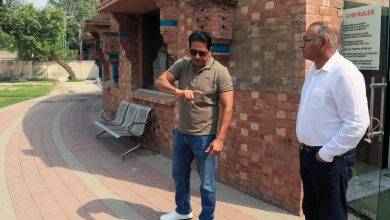
“We have prepared pitches with 6mm of grass so our batsmen and bowlers do not struggle on seam-friendly wickets,” Aqib explained.
“While we cannot easily replicate the exact extra bounce of Australian soil, leaving grass on our local pitches allows us to simulate the movement you see in England or the West Indies. We have given them these pitches so they can prepare better.
The Pakistan Cricket Board (PCB) recently announced a pool of 49 players who form the core of the country’s long-term transition phase. This group has been split into highly specialized units to avoid the pitfalls of switching between formats without adequate preparation. A specialized group of 22 players is currently dedicated entirely to red ball preparation, while the remaining pool is stationed in a separate white ball camp, preparing for limited-overs assignments and the upcoming Asian Games.
Addressing questions regarding squad selection, Aqib clarified that omission from the long-term planning phase does not mean a permanent end for any player.
“The announcements we make about camps and tours can never be permanent,” Aqib said. “If you look around the world, international cricket only yields one or two settled players every year. If we give four or five players a chance and one or two successfully settle into international cricket, that is a success.” Aqib cited young batsman Kamran Ghulam as an example of a player who performed well but remains part of a broader, fluid evaluation process.
“We brought Kamran in and he gave a reasonably good performance. But you have to see who can go with you better in the long run. And we will bring him back wherever his addition will be felt,” Aqib was quick to add.
About Imran Niazi Aqib said: “He has been close to the team for two or three years, but you have to permanently settle into the side. He is still young, and we are sending him to the United States for specialized training to refine his game.”
Aqib also defended the management’s historical approach to bilateral series, noting that team rankings dictated how much experimentation selectors could afford.
“People forget that a year and a half ago, teams like Sri Lanka and the West Indies had to play in a qualifying round just to make to the World Cup,” Aqib said.
“Bilateral series determine your ranking and your safety. If you slip below the top six, any bad day can see someone else leapfrog you.
With Pakistan’s ranking positions currently stabilized, Aqib stated that the focus from October onward will shift entirely toward direct World Cup preparation, balancing the integration of youth with experienced veterans.
He expressed immense confidence in the upcoming generation, particularly pointing to the success of Pakistan’s youth development pathways.
About the Asian Games lot which Pakistan announced the other day Aqib said it was such an opportunity in which which core and upcoming players are used.
“And we thought to use a team carrying experienced and young cricketers. Pakistan had defeated India at the U-19 level and also at the Shaheens level and have also gave them tough time. We want to mix young and experienced players now, and I am highly hopeful they can replicate that success at the Asian Games”
About Shaheen Afridi’s exclusion from the red ball cricket camp Aqib said there is nothing permanent.