By Alam Zeb Safi
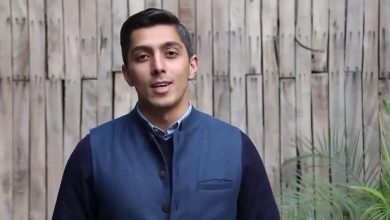
LAHORE: Pakistan Football Federation (PFF) has appointed Shahid Niaz Khokhar as its Chief Operating Officer (COO) as the governing body seeks to rebuild the sport after more than a decade of administrative turmoil and on-field decline.
The appointment is among the key major decisions taken by the new PFF leadership headed by Mohsin Gilani, a former Asian Football Confederation (AFC) and FIFA official, who assumed office following the federation’s long-running normalisation period.
Khokhar has formally assumed charge of the post, sources within the federation said, marking a significant step towards restructuring the PFF’s administration and governance.
Brining a professional like Khokhar aa COO signals an effort by the PFF to professionalise its operations, a move widely seen as essential if Pakistan football is to recover from years of instability, suspensions and internal divisions.
Khokhar brings nearly two decades of experience within Pakistan’s football system. He previously served as Head of Leagues, Club Development and Club Licensing during the tenure of former PFF president Makhdoom Syed Faisal Saleh Hayat. He also played a central role during the FIFA-appointed Normalisation Committee (NC) led by Haroon Malik, where he was involved in managing day-to-day operations and navigating complex administrative challenges.
During the NC’s tenure, Khokhar was involved in negotiations with government authorities and assisted in organising international fixtures in Islamabad. His familiarity with both domestic stakeholders and international football bodies is viewed as a key asset at a time when the federation must rebuild credibility with FIFA and the AFC.
Khokhar understands the entire football ecosystem in Pakistan and has worked through both stable and crisis periods. That institutional memory is critical right now.
Despite the appointment, it is understood that the challenges facing the new PFF leadership remain formidable. Gilani, Khokhar and the senior management team must address long-standing governance issues, rebuild trust among stakeholders and revive domestic competitions that have suffered repeated disruptions.
Pakistan football endured severe damage over the past decade due to factional infighting, court cases and parallel administrations which resulted in repeated FIFA suspensions. The prolonged instability stalled player development, led to the loss of several talented footballers and deprived multiple age groups of competitive opportunities.
With the normalisation phase now concluded, attention has shifted to long-term reform. The success of Gilani’s leadership will depend on his ability to take transparent decisions, recruit qualified professionals and attract investment into infrastructure and youth development.
Pakistan, a country with a large football fan base, lacks modern training facilities and structured pathways for young players. Sustained funding and systematic planning will be required to develop age-group teams and restore competitiveness at regional and international levels.
For the PFF the appointment of a seasoned administrator in a key operational role is being seen as an early test of its commitment to reform and a necessary step in its attempt to steer the sport away from a troubled past toward a more stable future.