By Alam Zeb Safi
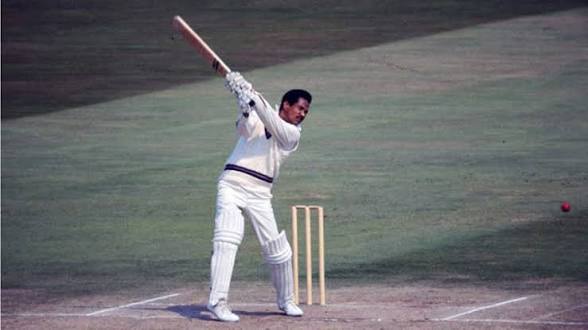
LAHORE: Sir Garfield “Garry” Sobers, the Barbadian cricketer widely regarded as the greatest all-rounder the game has ever produced, has died at the age of 89, bringing to a close one of cricket’s most celebrated careers.
Cricket West Indies confirmed his death.
Sobers, whose extraordinary blend of elegant batting, versatile bowling and brilliant fielding redefined what one player could achieve, left an imprint on cricket that has endured for more than seven decades.
Born in Bridgetown, Barbados, on July 28, 1936, Sobers made his Test debut for the West Indies as a 17-year-old in 1954. Initially selected as a left-arm spinner, he rapidly evolved into a complete cricketer capable of opening the bowling with pace, switching to orthodox or wrist spin, and dominating attacks with the bat.
His defining innings came in 1958 when, at just 21, he scored an unbeaten 365 against Pakistan in Kingston. The knock established a new world record for the highest individual Test score, a mark that stood for 36 years until fellow West Indian Brian Lara surpassed it in 1994.
Across 93 Test matches between 1954 and 1974, Sobers amassed 8,032 runs at an average of 57.78, including 26 centuries, while taking 235 wickets with three distinct bowling styles and holding 109 catches. His unique ability to influence matches in every discipline made comparisons with later all-rounders inevitable, but few were considered his equal.
In first-class cricket, Sobers accumulated more than 28,000 runs and over 1,000 wickets, achievements that underscored his longevity and consistency across domestic and international competitions.
Sobers also etched his name into cricket folklore in 1968 when he became the first player to hit six sixes in an over in first-class cricket while playing for Nottinghamshire against Glamorgan, a feat that has since become one of the sport’s most iconic moments.
He captained the West Indies in 39 Tests after succeeding Frank Worrell, leading a side rich in talent during a period of transition. Though some tactical decisions, notably his declaration against England in 1968, remained subjects of debate, his attacking philosophy won admiration throughout the cricketing world.
Away from the field, Sobers overcame personal setbacks, including the death of teammate Collie Smith in a car crash in which Sobers himself survived. He later spoke candidly about struggles with alcohol and gambling during his playing career.
Recognition followed throughout his life. He was knighted by Queen Elizabeth II in 1975 for services to cricket and was named a National Hero of Barbados in 1998. The International Cricket Council’s annual award for the men’s Cricketer of the Year bears his name — the Sir Garfield Sobers Trophy — reflecting his enduring influence on the sport.
Tributes poured in from across the cricketing world following news of his death.
Cricket West Indies described Sobers as one of the game’s greatest ambassadors, while former West Indies captain Brian Lara called him a legend whose legacy would never be forgotten. India’s Sachin Tendulkar remembered him as “the One and Only,” and Virat Kohli said cricket had lost one of its greatest figures. Administrators and players from Australia, England, India and beyond praised Sobers’ unmatched contribution to the game.
Sobers is survived by his three children and six grandchildren. His death marks the end of an era, but his achievements continue to define excellence in cricket, ensuring that future generations will measure greatness against the standard he set.